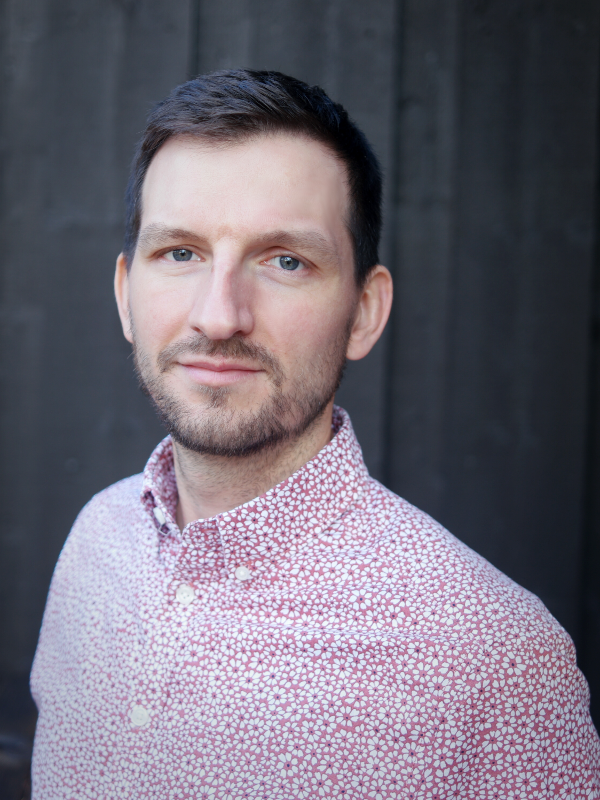
Michael Jahn

Computational Biology, Open Science, and Everything Else.

Streptococcus pyogenes genome sequence update

Now published in MRA

We recently noticed problems to map next generation sequencing reads to certain regions of the Streptococcus genome, our pet organism for the study of pathogenic bacteria at the MPUSP. An extensive re-sequencing effort using short and long read methods revealed that the original assembly contained various errors, particularly for repetitive rRNA/tRNA operons (published now in MRA). Our new assembly fixes these errors and adds two new tRNAs, becoming the current reference assembly for Streptococcus pyogenes. It’s available on NCBI datasets.


New paper on energy metabolism of Cupriavidus necator

Now published in AEM

We published our second paper about C.necator in AEM which uses a barcoded transposon library to study its energy metabolism. This is not only a continuation of our previous work but also a systematic survey in the spirit of the landmark paper by R. Cramm, 2008 – in this extensive review, the author meticulously collected all known information about the energy metabolism of this interesting organism. Our work investigated the relative importance of all formate dehydrogenases, hydrogenases, and electron transport chain complexes experimentally, with several remarkable findings. This study was a fruitful collaboration between three groups that I am sincerely grateful for, Paul Hudsons lab, Oliver Lenz’ lab, and Emmanuelle Charpentier’s lab.


New CRISPRi library for Synechocystis

Now published in The Plant Cell

Very happy that our newest CRISPRi library paper was finally published in The Plant Cell from Oxford University Press. The paper takes a deep dive into the subtle tradeoffs between growth rate and growth robustness in photosynthetic bacteria. All fitness data are available online in my R Shiny App ShinyLib.


New CRISPRi library paper on BioRxiv

A collaborative effort between Stockholm and Berlin

Together with my colleagues at Science for Life Lab, Stockholm, we have submitted a new manuscript with the second iteration of our CRISPR interference library in cyanobacteria. The paper is currently in revision but can already be accessed on BioRxiv.org. It’s filled to brim with new insights about fitness tradeoffs in photosynthetic bacteria, such as fitness cost for the highly expressed photosystem and light harvesting protein machines. Special thanks to Rui Miao who is the shared first author with me.


Joining the Editorial Board of Frontiers

As a Review Editor

I was recently invited to join the Editorial Board of the journal Frontiers in Bioengineering and Biotechnology. In the role of a review editor, I will occasionally review selected manuscripts for the journal and in return get public recognition for reviewing and editorial activities. This is more work for the me then for the journal, but it’s still an opportunity to be actively involved in the publishing process in my field. We will see how it goes.


New position at MPUSP, Berlin

Excited to join the Max Planck Unit for the Science of Pathogens

New Job! After six exciting years as a Postdoc in Stockholm, I moved back to Germany together with my family. Living now in the greater Berlin area, I will start working at the Max Planck Unit for the Science of Pathogens (MPUSP) situated on the Charité campus in the heart of Berlin. I will work in the group of Emanuelle Charpentier, supporting different data-centered projects involving mass spectrometry, next generation sequencing, and many other things.


Protein allocation in the versatile chemolithoautotroph Cupriavidus necator

Now published in eLife

Our new paper, “Protein allocation and utilization in the versatile chemolithoautotroph Cupriavidus necator”, was finally published in eLife!. It was a long journey, taking almost two and a half years to submission and another six months of review and improvements to finally publish it. We combined several layers of genome-wide screens: MS proteomics, gene essentiality from a transposon mutant library, and resource balance analysis modeling. Combining these layers allowed us to show that C. necator is a bacterium in the making. It has several conflicting layers of regulation to tune gene expression of its highly versatile but complicated carbon and energy metabolism. Our results show for example that cells “waste” protein resources for autotrophic lifestyle even when no hydrogen is available. In the next sections, I will take a deep dive into the detailed findings of our paper.


New preprint for *Cupriavidus* project

Now available on BioRxiv

Our new paper about protein utilization in the versatile lithoautotroph Cupriavidus necator (aka Ralstonia eutropha) was just deposited on BioRxiv.org. Integrating data from proteomics, resource allocation modeling, and a transposon mutant library, we found some really interesting things. For example, of the three chromosomes that C. necator owns, one encodes 80% of the protein mass (the housekeeping chromosome). The other chromosomes encode specialized functions like CO2 fixation genes and were probably acquired later in evolution. The expression of these genes conflicts with overlapping functions of the ancestral chromosome.